
Claude now counts 4 different models, while each model has 5 different levels of complexity to choose from (low, medium, high, extra and max), giving you a total of 20 options to choose from. And as if that was not overwhelming by itself, the models are constantly going through updates: in September alone, Fable, Opus and Sonnet all got a new version.
By the end of this short article, I will break down how you can efficiently take advantage of all the current models, and their levels of effort.
Fable 5.1: the most powerful one
Fable 5 was launched in early June, and right after it got pulled out for a couple of weeks after the US government applied export controls to it, then came back on 1 July with tighter cybersecurity checks built in. Its successor, Fable 5.1, followed on 1 September at the same price.
It also carries the highest price tag, roughly two and a half times what Opus 5.5 costs per token. I'd suggest using it for the tasks that genuinely need the extra headroom, such as heavy coding or very complex research and development, while using the 'cheaper' models for everything else.
Sonnet 5.5: the medium tier has been working like a charm
Right off the bat, I will start by saying this has been the model I have been using the most. One of the reasons is, like most Claude users, I'm enrolled in the Pro plan ($20 instead of $100 for the Max) and usage is something I need to keep an eye on. Goes without saying that, for different tasks, you might need to increase the model in order to get more power, but I must say for 80% of the tasks I do, which include everything from simple coding to finance work and forecasting, Sonnet 5 has been the real deal for a fraction of the usage cost of the big brothers (Opus and Fable). Sonnet 5.5 came out on 28 September at the same price, and Anthropic says it's faster and up to 30 per cent cheaper per task, so it's the one I'd now open by default.
Opus 5.5: for the harder tasks
Opus 5.5 sits between the two. It launched on 22 September, priced below the last version, Opus 5, and Anthropic says it costs around 40 per cent less to run on typical workloads while getting close to Fable 5.1 on the hard tasks.
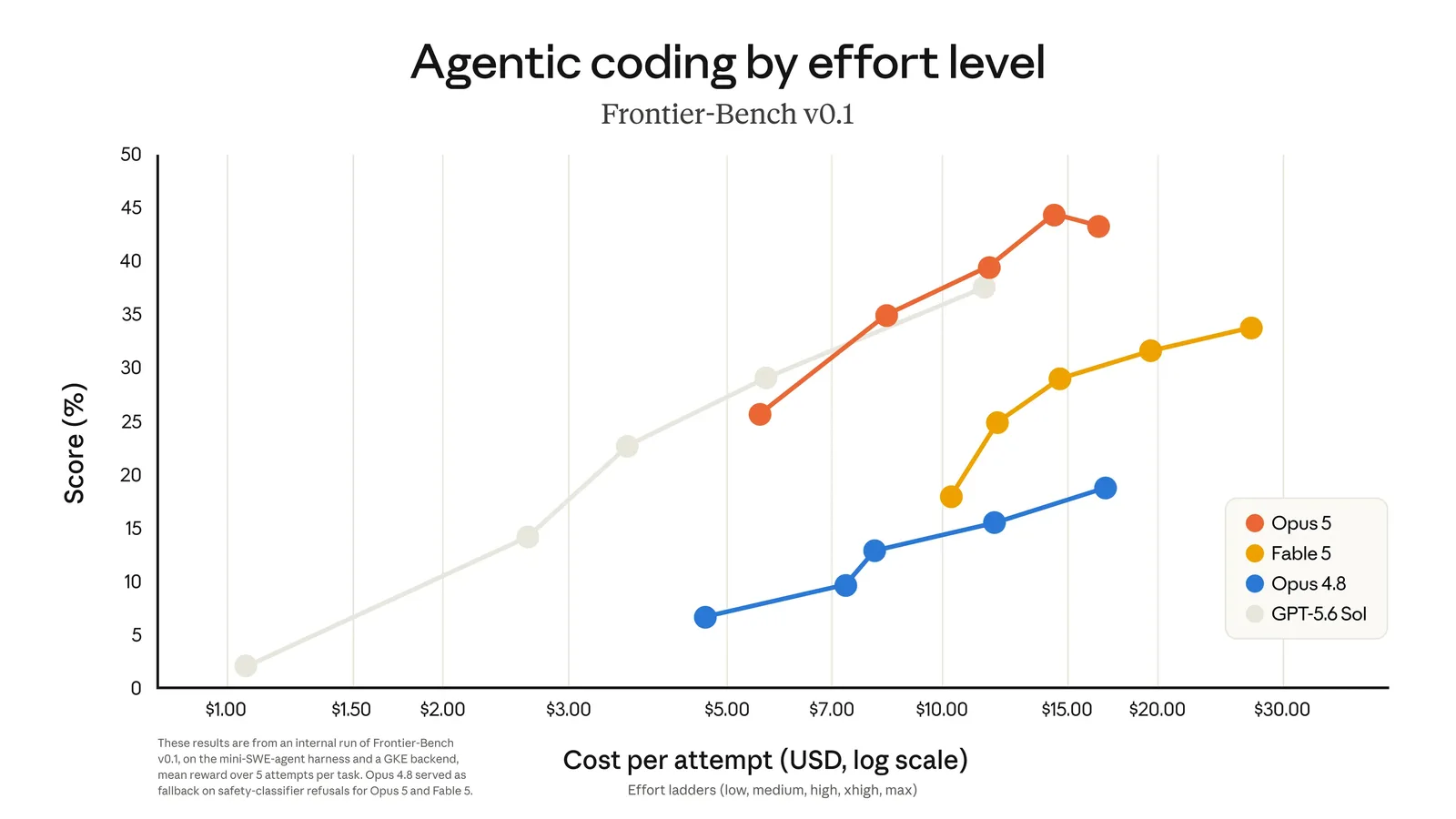
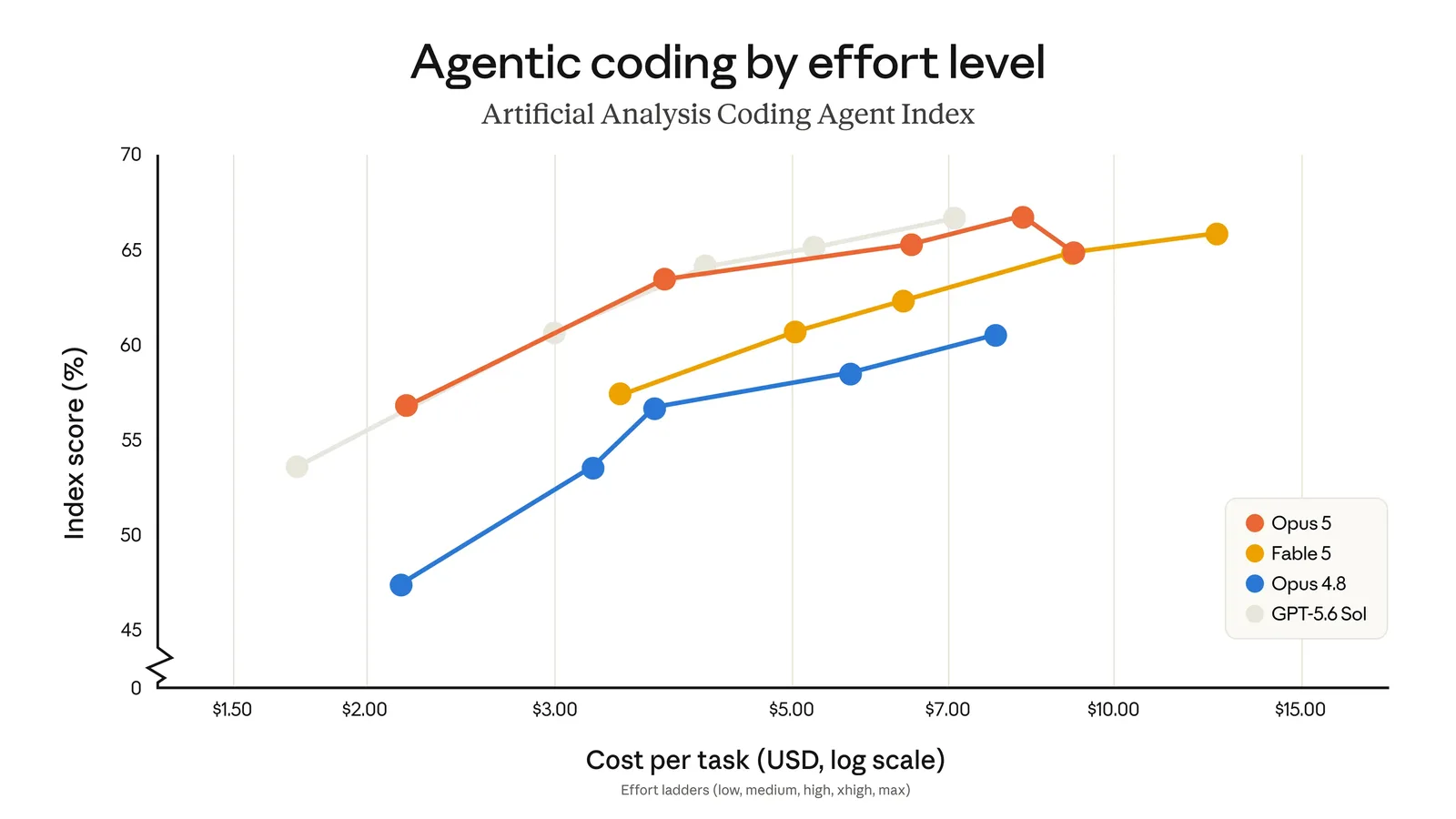
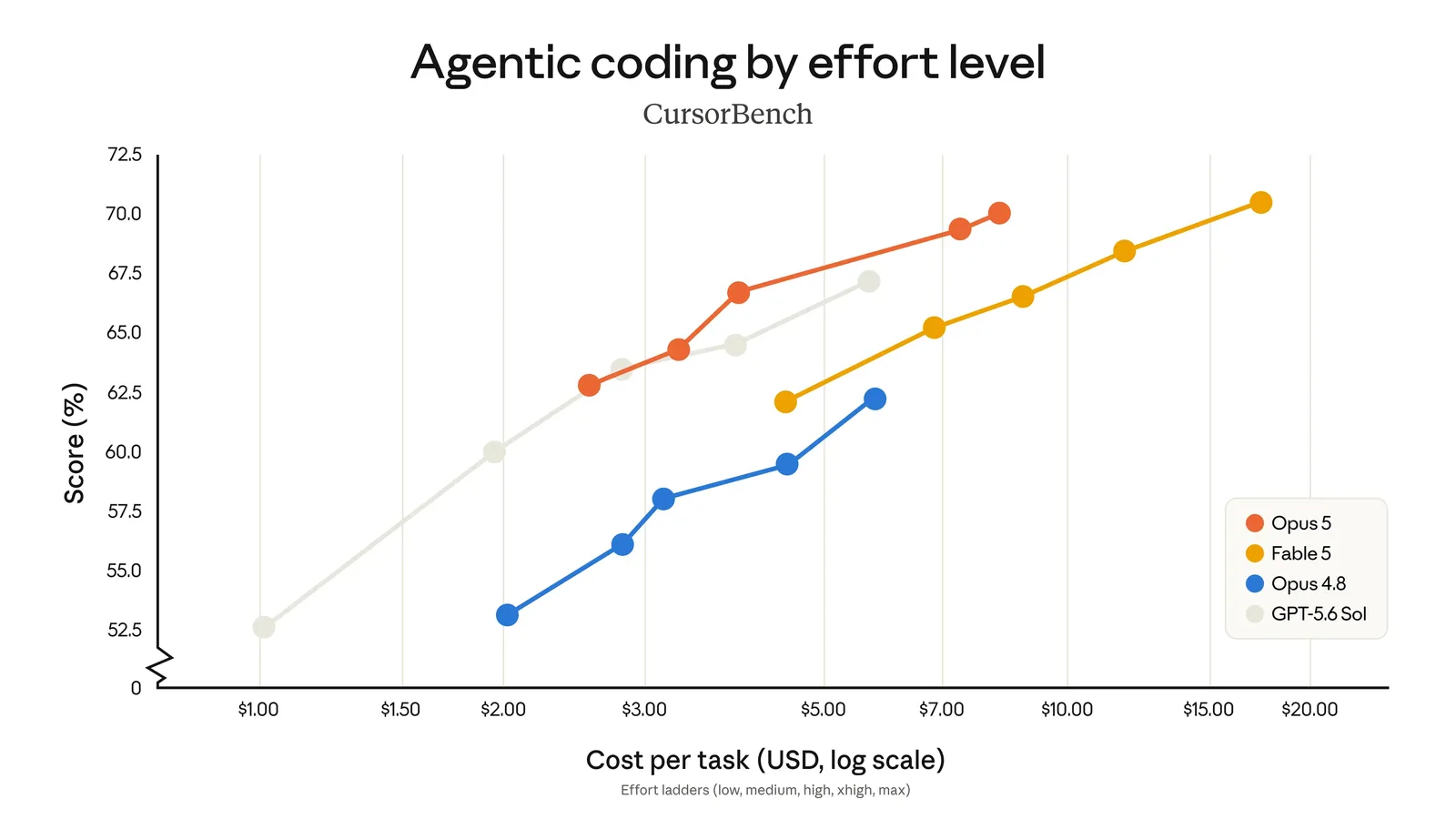
What sold me on it is that you can push it to Extra or Max for a genuinely hard problem and potentially get better results than Fable, or dial it back to Low or Medium for less demanding tasks, all for a fraction of Fable's price. The charts below come from Anthropic's own benchmarks at the Opus 5 launch in July, and show the same pattern across three different tests.
In conclusion
First of all, I'd suggest playing around with the different models to see what works for you. However, if you want to stay efficient, I feel nothing beats Sonnet 5.5: working with complexity on medium and high will cover most of what you throw at it, on a daily basis. For everything else that requires more tech power, I'd go for Opus 5.5 on high effort (or above). And when you really can't get it right, or just feel Claude could do a better job, that's when I suggest reaching for Fable, as a last resort.